Pool Deck Restoration
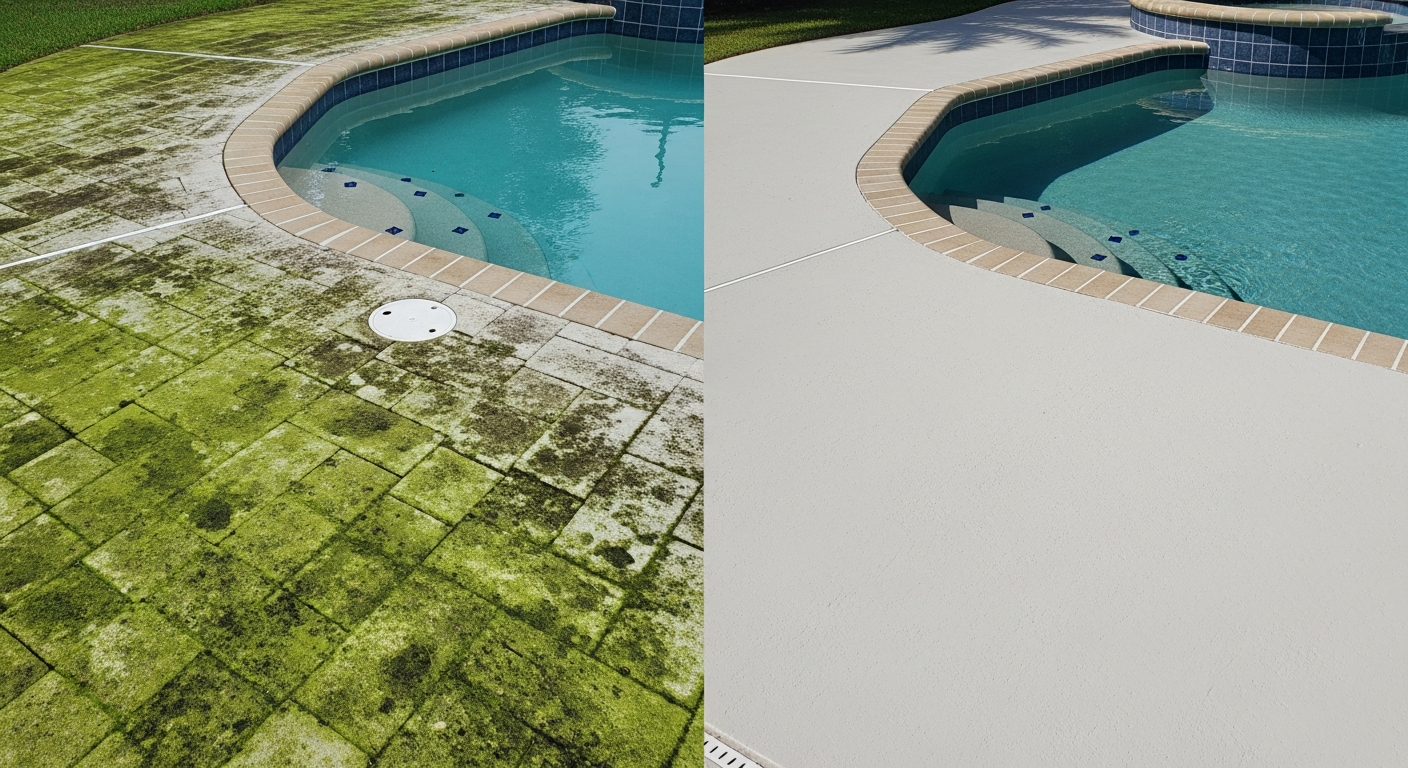
A green, slippery pool deck is a liability issue, not just an eyesore.
Pool Deck Restoration
Pool Deck Restoration
A green, slippery pool deck is a liability issue, not just an eyesore.
Pool decks stay wet. Wet surfaces grow algae fast in Florida's climate. Algae makes travertine, concrete, and paver pool decks dangerously slippery. Beyond the safety risk, algae stains are progressive. The longer they sit, the deeper they penetrate. Pool decks also take a beating from pool chemicals, UV exposure, and constant foot traffic. Regular professional cleaning keeps them safe and looking good year after year.
- 1.Algae-covered pool decks are a documented slip-and-fall hazard. Homeowner liability in a pool area injury can be significant
- 2.Pool chemical splash and algae buildup etch into travertine and unsealed concrete permanently if not removed regularly
- 3.Neglected pool decks fail home inspection reports and can impact property sales
- 1
Assess the surface material and condition. Travertine, pavers, and concrete each require different pressure settings and treatments
- 2
Remove all algae, mold, and organic staining with targeted treatments and surface cleaning at the correct PSI
- 3
Inspect and document results. Optional sealing available for pavers and concrete to extend the clean and protect the surface.
Not sure what your property needs?
Every home is different. We assess the surfaces, identify what method is correct, and give you a straight quote. No upsell. No pressure.